

As battery-powered and portable devices have grown to dominate modern electronics, power efficiency has become one of the key challenges in circuit design. Low voltage (LV) devices have become a key element to meet this growing demand for energy efficiency and the increased adoption of automation across markets and applications from IoT devices and wearables to portable medical equipment and edge computing systems that operate under strict power constraints. The popularity of low voltage frequency control products, such as oscillators, has grown significantly as manufacturers have moved to satisfy demands for more powerful products, smaller packaging, and longer battery life.
As electronic systems continue to evolve toward smaller, more power-efficient designs, the ability of oscillators and timing devices to operate accurately at low voltages is essential.
The Importance of Low Voltage Oscillators
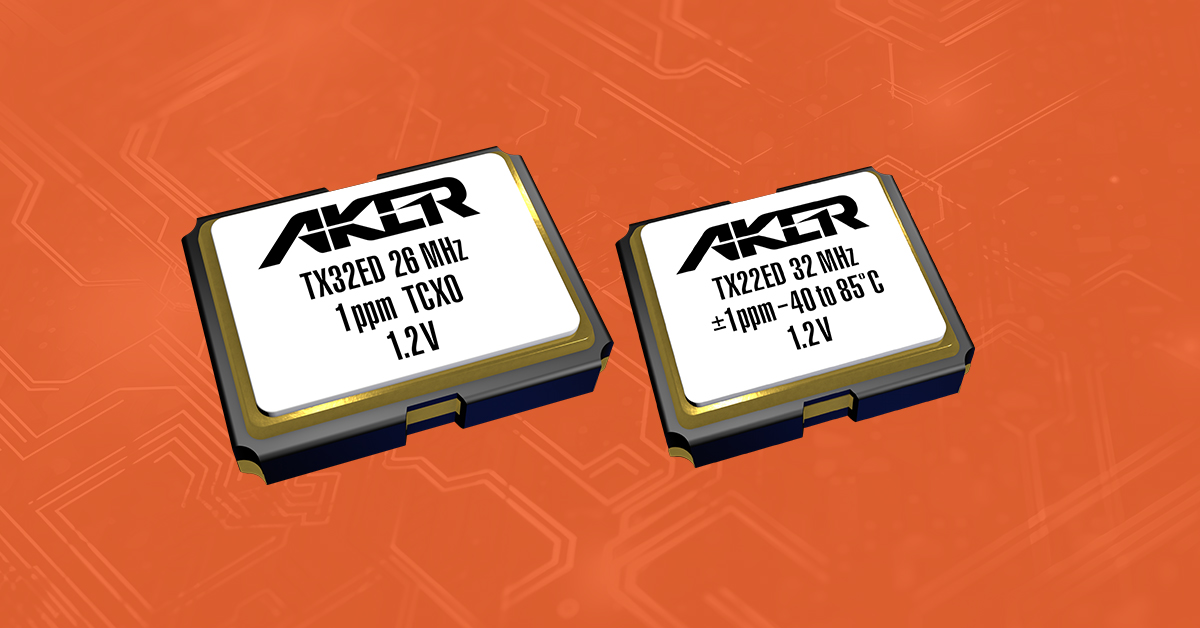
Crystal oscillators are fundamental components in modern electronic systems, providing the precise timing necessary for communication, computation, and sensor network operations. Low voltage capabilities refer to an oscillator’s ability to function reliably at reduced supply voltages, typically 1.8 V, 1.2 V, or even below 1.0 V, like our low-voltage SMD crystal oscillator series, without sacrificing timing accuracy or stability. As microprocessor units (MCU) and system-on-chips (SoCs) scale down their core voltages to reduce power consumption, frequency control components must operate within these lower voltage domains to remain compatible while maintaining frequency stability and low phase noise.
What are the Benefits of Low Voltage?
As modern electronics strive towards sustainability, the demand for energy-efficient solutions has soared. By utilizing low voltage oscillators, the modern needs, preferences, and global trends across various markets can be met with efficiency. These key advantages include:
- Reduced Power and Heat: Low voltage oscillators play a crucial role in enhancing energy efficiency across various devices and applications. By operating at lower voltages, electronic systems consume less energy, benefiting the environment and resulting in significant cost savings over time.
- Simplified Power Design: Low voltage oscillators enable greater integration and miniaturization, supporting smaller, thinner, and more lightweight products. This simplifies system architecture and component placement, making it easier to meet size, weight and power (SWaP) constraints while still delivering reliable and precise timing performance.
- Extended Battery Life: With low voltage oscillators consuming less power, they are ideal for IoT sensors, wearables, and portable electronics, maximizing the battery life, supporting maintenance free operation, and enhancing overall user experience.
- Reduced EMI: Low voltage oscillators operate with lower voltage amplitude. The resulting electromagnetic radiation energy is relatively small, thus reducing electromagnetic interference.
Where Low Voltage Matters Most
As modern technologies evolve, the applications for low voltage power have grown extensively. This brings into play the need for specific frequency control elements only found in low voltage oscillators. The significantly reduced power consumption of LV oscillators is critical for battery-powered devices and applications to minimize power draws, especially when considering the long-term battery life and energy efficiency of a circuit. The commercial and automotive electronics market that drives the demand for low voltage products is vast, with numerous applications that utilize low voltage electronic components including:
Internet of Things (IoT): IoT aims to create more automated and data-driven residential and industrial environments by seamlessly integrating physical and digital systems. As more devices within these spaces become interconnected, the demand for low voltage power solutions that can support continuous, reliable operation increases. Low voltage oscillators are indispensable in IoT applications, delivering durable and reliable performance in harsh environments while ensuring seamless compatibility and long-term, failure-free operation.
Medical: The trend towards smaller, more compact medical devices that are more convenient for patients also demands more precise frequency control. Many medical devices, especially those that patients wear or carry for extended periods, utilize low voltage electronics for safety and efficiency, including pacemakers and hearing aids. Portable medical devices rely on precise and stable timing for accurate monitoring, diagnostics, and data collection. Low-voltage oscillators reduce power consumption, which is vital for patient safety, reduce size and weight to maximize device comfort, and extend battery life and operational times.

Automotive: In automotive environments, low-voltage oscillators support sensors, control units, and advanced driver assistance systems (ADAS) that require reliable timing signals. LV oscillators help maintain performance across wide temperature ranges while keeping power consumption low. All automotive products meet AEC-Q standards to ensure reliability and durability under harsh operating conditions.
The Future of Frequency Control
Understanding the pivotal role that low voltage oscillators play in modern electronics today is essential for leveraging their benefit to improve future advancements. Low voltage oscillators enable precise, stable timing while meeting the strict power, size, and thermal constraints of today’s most demanding applications, from IoT and medical devices to automotive and industrial systems. By reducing power consumption, simplifying system design, extending battery life, and maintaining low noise and high reliability, low voltage oscillators play a critical role in supporting sustainability, performance, and long-term system integrity. Low voltage oscillators are the ultimate frequency control choice for today’s low-power, high-precision applications, driving future innovations and representing a significant breakthrough in electronic component design.